

How Often Should You Change Engine Oil in Hot Climates?
- December 31, 2025
- Posted by: General Petroleum
- Category: Blogs
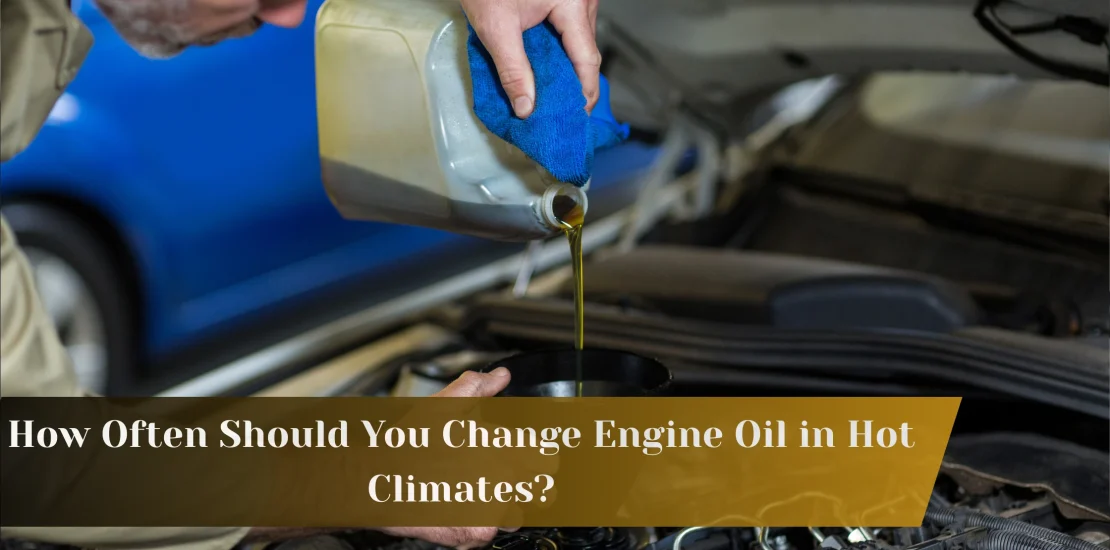
In hot weather conditions, vehicle engines are subjected to increased pressure as a result of heat and humidity levels that can exceed the limits of a normal operating environment. Therefore, it is important to have adequate amounts of lubricant available for all engine components at all times due to the possibility of engine overheating due to high ambient temperatures.
In addition, Many advanced formulations used in the top engine oil in USA are designed specifically for use under these extreme conditions; as such, even under these circumstances, they may be subject to degenerative effects from exposure to extreme heat. Thus, it is necessary to know how frequently to perform scheduled engine oil changes in order to ensure reliability/performance of your engine.
Why Hot Weather Accelerates Oil Degradation
In extreme heat, engine oil becomes thinner quickly. This means that the engine’s lubrication barrier between metal parts is decreased. Reduced oil viscosity means more friction between engine parts. It means higher engine temperatures and accelerated wear and tear. This clearly explains how lubricants protect engines under operating conditions by ensuring that there is always a constant barrier between moving parts despite the heat and friction of engines. In hotter climates, sub-standard oil degrades quickly.
Recommended Oil Change Intervals in Hot Climates
Although most car manufacturers recommend changing oils between 5,000 and 10,000 kilometers, in hot environments, oils might need to be changed even earlier. In hot environments, constant high temperatures, congested road traffic, idling, and long road miles will shorten the oil’s life. High-performance engine oils, like high-performance engine oil USA products, are formulated for resistance to both oxidation and hot flow, enabling their safe use even when operating under severe conditions.
Oil Quality and Fuel Efficiency
Understanding how engine oil quality affects fuel efficiency is essential for drivers in hot environments. As the oil deteriorates, the friction that occurs in the engine causes the engine to work harder, thus requiring a significant amount of fuel to operate. High-quality oil, therefore, translates to a much more fuel-efficient engine.
Selecting the Right Oil for Extreme Temperatures
In making the right choice of engine oil, it should not only be based on viscosity but also on the formulation of the product. This is because the thermal stability of high-quality engine oil will not allow sludge formation. This is important for machines operating under continuous stress, as is the case with industries using industrial oil in Canada. This is also important for vehicles operating under high heat.
Final Thoughts
In regions with warmer climates, it is important that delayed changes between oils are kept at a minimum because this could affect engine functionality and longevity. As oils deteriorate faster when temperatures are higher, it has become crucial that by using good oils and being aware of the properties and functionality of oils when operating in higher temperatures, car functionality and longevity can be guaranteed.